How Many Steps Are in a Mile? Measure Your Answer
One mile is 2,112 steps at a 30-inch step—but your pace, terrain, and step length can change the answer. Here is how to measure it.
In this guide · 6 sections
A mile is fixed. Your number of steps is not. The conversion changes with the distance covered by each step, which can shift with height, pace, terrain, fatigue, mobility, and the way a device estimates movement.
That is why a useful answer begins with a step length, not a universal steps-per-mile slogan. At 30 inches per step, one mile is 2,112 steps. At 24 inches, it is 2,640. At 36 inches, it is 1,760.
This guide shows the arithmetic, a practical way to measure your own step length, and how to use the result without expecting a calculator to reproduce every number from a phone or watch.
The short answer
At a 30-inch step length, one mile equals 2,112 steps. Your answer is 63,360 divided by your step length in inches, so measuring your own normal walk is more useful than borrowing one fixed average.
What to remember
- One mile contains 63,360 inches.
- Step length—not the step count alone—determines distance.
- Measure several normal passes instead of one exaggerated step.
- Treat phone, watch, GPS, and calculator distances as estimates made by different methods.
Start with the range, not one magic number
At a 30-inch step, a mile takes 2,112 steps. That is a useful worked example because the arithmetic is clean, but it is not a claim that every adult walks with a 30-inch step. A six-inch change in either direction moves the answer by hundreds of steps.
The table below holds the mile constant and changes only step length. It shows why two people can walk the same route, agree that the route is one mile, and still record different step totals without either person being wrong.
Steps in one mile by step length
Swipe table →| Step length | Steps per mile | 10,000 steps covers |
|---|---|---|
| 24 inches | 2,640 | 3.79 miles |
| 27 inches | 2,347 | 4.26 miles |
| 30 inches | 2,112 | 4.73 miles |
| 33 inches | 1,920 | 5.21 miles |
| 36 inches | 1,760 | 5.68 miles |
Keep in mind
The step lengths are examples for comparing the formula. They are not age-, sex-, height-, or ability-based targets.
Sources [1]
Use the steps-per-mile formula
The international mile is 5,280 feet, and each foot contains 12 inches. That makes one mile 63,360 inches. Divide those inches by the distance covered by one step: steps per mile = 63,360 ÷ step length in inches.
For a 30-inch step, the calculation is 63,360 ÷ 30 = 2,112 steps. To go in the other direction, multiply the number of steps by step length and divide by 63,360: miles = steps × step length ÷ 63,360.
Keep the units consistent. If you measure step length in centimeters, either convert it to inches first or perform the entire calculation in metric units. Mixing centimeters with 63,360 produces an answer that looks precise and is completely wrong.
Sources [1]
Step length changes the answer.
Measure your step length without staging it
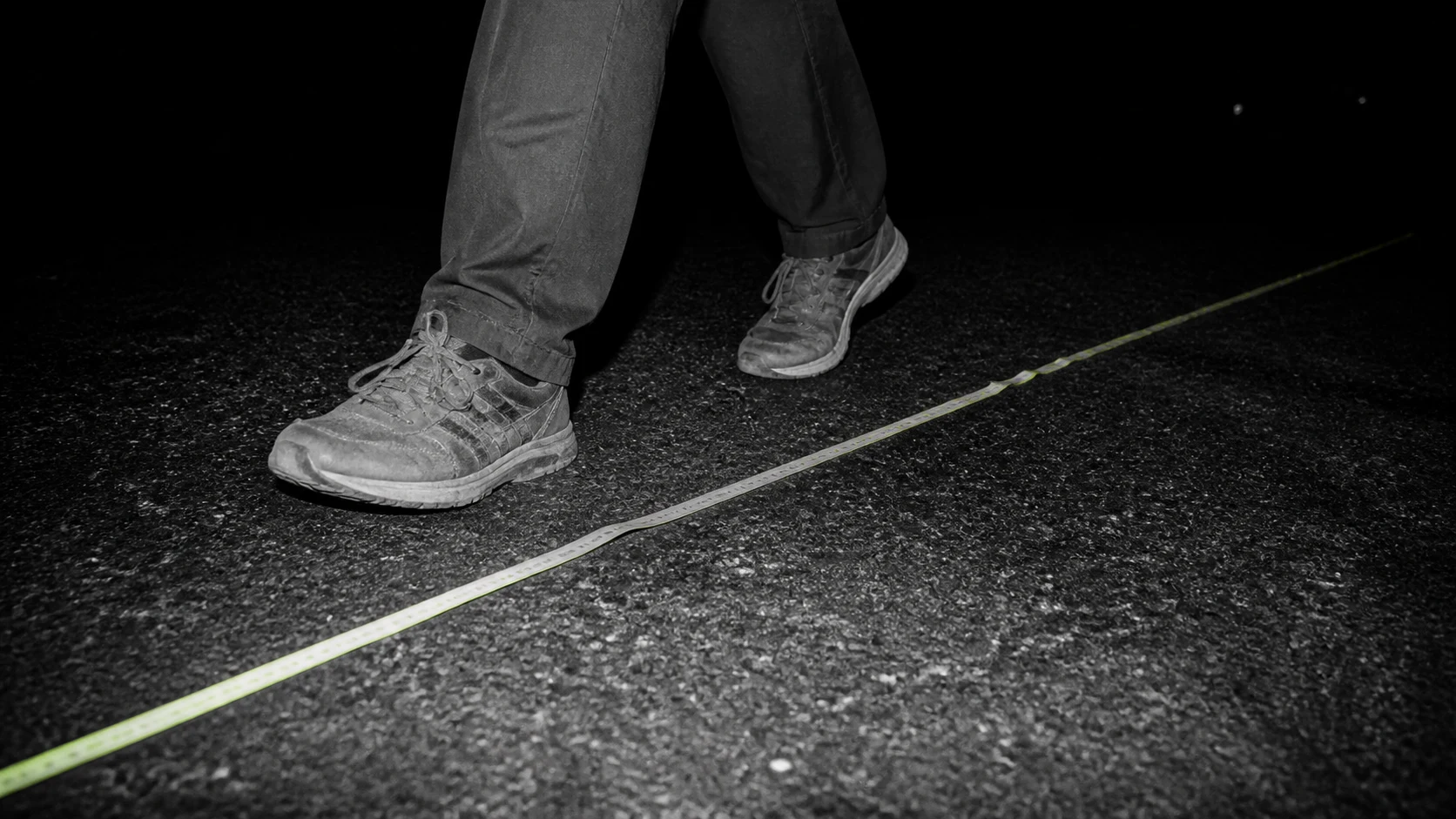
Do not put a tape beside one foot and reach forward as far as possible. That measures a deliberate lunge, not the step you repeat across a normal walk. A better method uses a known straight distance and several ordinary steps.
Mark a start and finish on a flat, unobstructed surface. Begin walking before the start mark so you cross it at your usual pace, count each foot contact through the measured section, and continue past the finish. Divide the measured distance by the number of steps inside it.
The National Institute on Aging research protocol describes average step length as total distance divided by total steps. For personal use, repeat the pass three to five times and average the results. A longer measured section reduces the influence of one awkward first or last step.
- Use a flat route where you can walk naturally and safely.
- Measure at least 30 to 60 feet when space allows.
- Count both left and right foot contacts as steps.
- Repeat the pass and average it; do not select only the longest result.
- Measure walking and running separately if you convert both.
Sources [2]
Know why the answer changes
Step length is a behavior, not a serial number. Research on gait shows relationships with factors such as stature, age, walking speed, and body weight, while also showing enough variation that one demographic formula cannot replace an individual measurement.
The practical consequence is simple: use the step length that matches the movement you are trying to convert. A treadmill calibration at a brisk pace may not describe a slow museum day, a hilly route, or a run.
Pace
People often lengthen steps as speed rises, although cadence also changes. Measure at the pace you want the calculator to represent rather than trying to force one value across every speed.
Terrain and turns
Hills, stairs, loose ground, snow, crowds, and tight turns can shorten or vary steps. A straight, level calibration is easier to reproduce but may not mirror every route.
Fatigue, pain, and mobility
Fatigue, symptoms, assistive devices, injury, and changes in mobility can alter gait. A calculator should follow those realities, not ask someone to match a supposedly normal step.
Walking versus running
Running mechanics and step length differ from walking. Keep separate estimates if you regularly convert both modes, and avoid applying a walking calibration to a run simply because the device reports both as steps.
Sources [4]
Distance ÷ steps = your step length.
60 FT
24
30 IN
Expect your phone and watch to disagree sometimes
A simple converter knows only the count and step length you enter. A phone or watch may estimate distance from GPS, motion sensors, a learned calibration, height, arm movement, where the device is worn, or a combination of signals. Those systems are answering the same question with different evidence.
A systematic review of ActiGraph devices found that step-count and distance performance varied by model, wear location, population, and walking or running speed. That does not mean devices are useless. It means a single displayed number should not be mistaken for a laboratory reference under every condition.
For trend tracking, consistency often matters more than forcing every device to match. Use the same primary device in a similar position, compare like with like, and investigate large or repeated changes rather than reacting to every small difference.
Keep in mind
GPS distance can also drift around buildings, tree cover, tunnels, and tight turns. Step-derived distance has different limitations; disagreement does not reveal the winner by itself.
Sources [3]
Use the estimate to make a route decision
The conversion becomes useful when it changes a plan. If 6,000 steps is roughly 2.84 miles at your measured 30-inch step, you can compare the target with a familiar loop, decide where a short extension belongs, or estimate how much of the day is already covered.
Do not make the route artificially exact. Crossings, GPS noise, indoor movement, and step changes mean the final count will not land on a mathematical finish line. Build a small buffer when timing matters and let the real route teach you how the estimate behaves.
Recheck the calibration when your usual pace, footwear, mobility, device, or route type changes substantially. The goal is not permanent precision. It is a transparent estimate that remains close enough to support the next decision.
- Convert the target before leaving so the route has a clear role.
- Save a short, normal, and long option rather than one perfect route.
- Compare estimates from the same device and movement mode.
- Round for action: two distance decimals and whole steps are usually enough.
Fast answers
Frequently asked questions
Is 2,000 steps always one mile?
No. Two thousand steps equals one mile only when each step averages 31.68 inches. It can be a rough memory aid, but a measured step length produces a more personal conversion.
How many steps are in a mile for a short step?
At 24 inches per step, one mile is 2,640 steps. Do not assume 24 inches describes you; enter or measure the step length you want to model.
Does height determine steps per mile?
Height can be related to gait and step length, but it does not determine one exact personal value. Pace, age, terrain, mobility, and individual movement patterns also matter. Direct measurement is more useful than a height-only estimate.
Should I use step length or stride length?
Use step length: the distance from one foot contact to the next. A full stride normally contains two steps, so entering stride length as though it were step length would roughly double the estimated distance.
Can I use the same number for running?
Not reliably. Running step length and mechanics differ from walking and vary with pace. Measure a separate running value if you need a step-derived running distance.
Bottom line
Make the next decision repeatable.
The right steps-per-mile number is not the most popular one. It is the one built from a clearly measured distance, your ordinary pace, and a formula you can check. Measure a few passes, keep the estimate to sensible precision, and update it when the way you move changes.
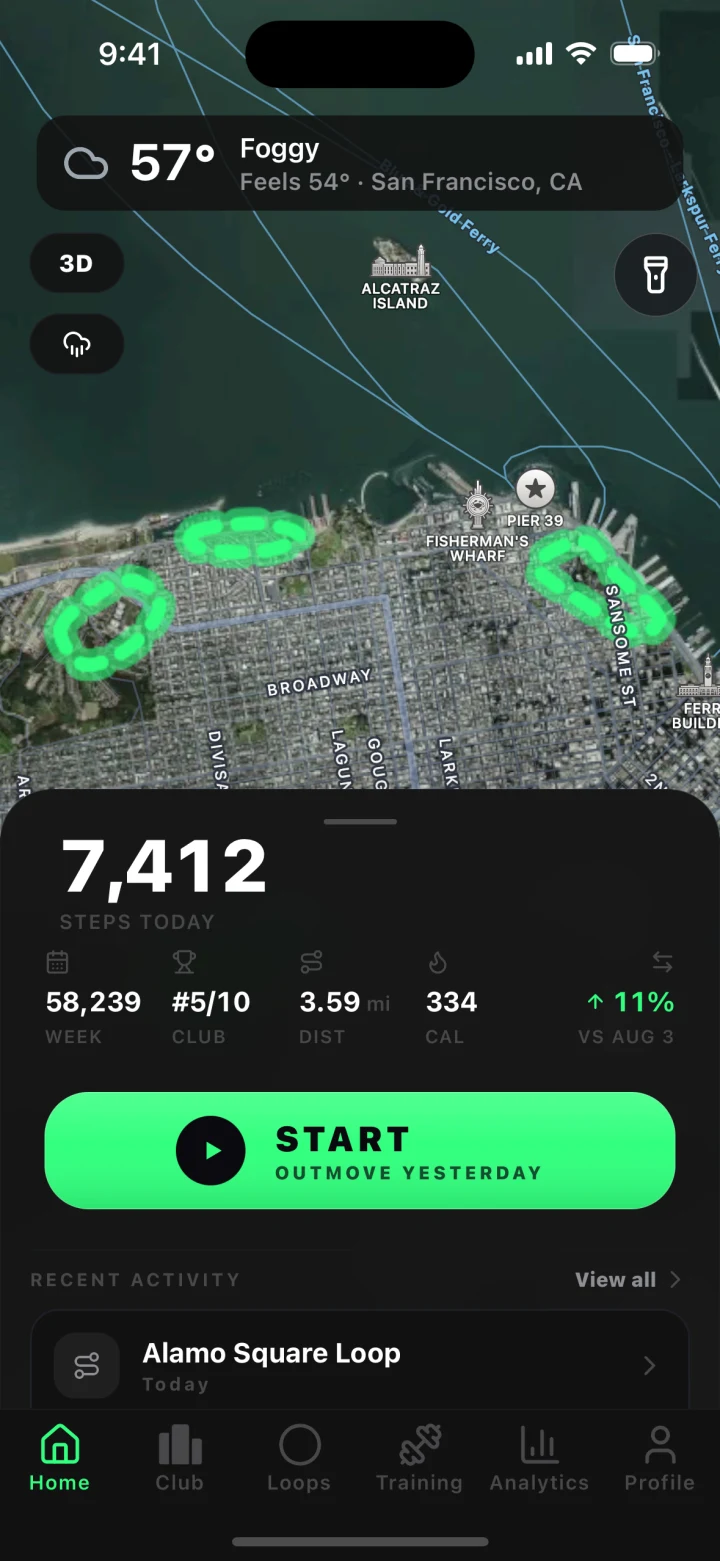
Steps and distance stay together.
The real GhostLoop Home screen places today’s 7,412 steps beside 3.59 miles, so the count keeps a route-sized meaning without pretending every step is identical.
Captured from GhostLoop iOS · August 2026Put it in motion
Enter your step length once, then convert steps to miles—or miles back to steps—with every assumption still visible.
Open the converterEditorial note
How this guide was made
GhostLoop built every table and worked example from the visible unit formula used by the linked calculator. The unit definition comes from NIST; measurement language follows the cited National Institute on Aging protocol; gait and device caveats are tied to the cited research. No height-based or demographic ‘average’ is presented as a personal fact.
Sources & further reading
- [1]NIST Handbook 133: one international mile equals 5,280 feet and 1.609344 kilometers
- [2]National Institute on Aging research protocol: step length as distance divided by steps
- [3]Criterion validity of step counting and distance measurement in adults: systematic review
- [4]Age, height, body weight, and preferred walking gait parameters
About the author
Ian Castillo · Founder, GhostLoop
Ian Castillo is the founder of GhostLoop, a movement app built around racing your past activity, Ghost Pacers, Clubs, and Challenges.
Author profileThis guide is general educational information, not individualized medical advice. Stop activity and seek appropriate professional guidance if symptoms or pain concern you.