10,000 Steps to Miles: A Personal Conversion Guide
At a 30-inch step, 10,000 steps is about 4.73 miles. Use your own step length to turn the round-number goal into a route you recognize.

In this guide · 6 sections
Ten thousand steps is a count, not a fixed route. At the calculator’s 30-inch example, it covers about 4.73 miles. A 24-inch step covers about 3.79 miles, while a 36-inch step covers about 5.68.
That spread is too large to hide behind one answer. The useful question is not only ‘How many miles is 10,000 steps?’ It is ‘How far is 10,000 of my ordinary steps, at the pace and on the route I actually use?’
This guide converts the number, turns it into time and route examples, and keeps the familiar 10,000-step goal separate from the personal decision of what your daily target should be.
The short answer
With a 30-inch step length, 10,000 steps is about 4.73 miles or 7.62 kilometers. Measure your own step length because a six-inch difference changes the result by nearly a mile.
What to remember
- At 30 inches per step, 10,000 steps is 4.73 miles.
- A steps-to-distance answer is only as personal as its step-length input.
- Distance can make a daily goal easier to map onto familiar routes.
- Ten thousand is an optional planning number, not a universal health threshold.
Convert 10,000 steps with a stated step length
The distance formula is steps × step length in inches ÷ 63,360. The step count stays at 10,000 in every row below; only the distance covered by each step changes.
A common shortcut says 10,000 steps is five miles. That result assumes 2,000 steps per mile, which in turn assumes a 31.68-inch step. The shortcut may be near your result, but it is still an assumption that should be named.
10,000 steps converted by step length
Swipe table →| Step length | Miles | Kilometers |
|---|---|---|
| 24 inches | 3.79 | 6.10 |
| 27 inches | 4.26 | 6.86 |
| 30 inches | 4.73 | 7.62 |
| 33 inches | 5.21 | 8.38 |
| 36 inches | 5.68 | 9.14 |
Sources [1]
Find your own 10,000-step distance
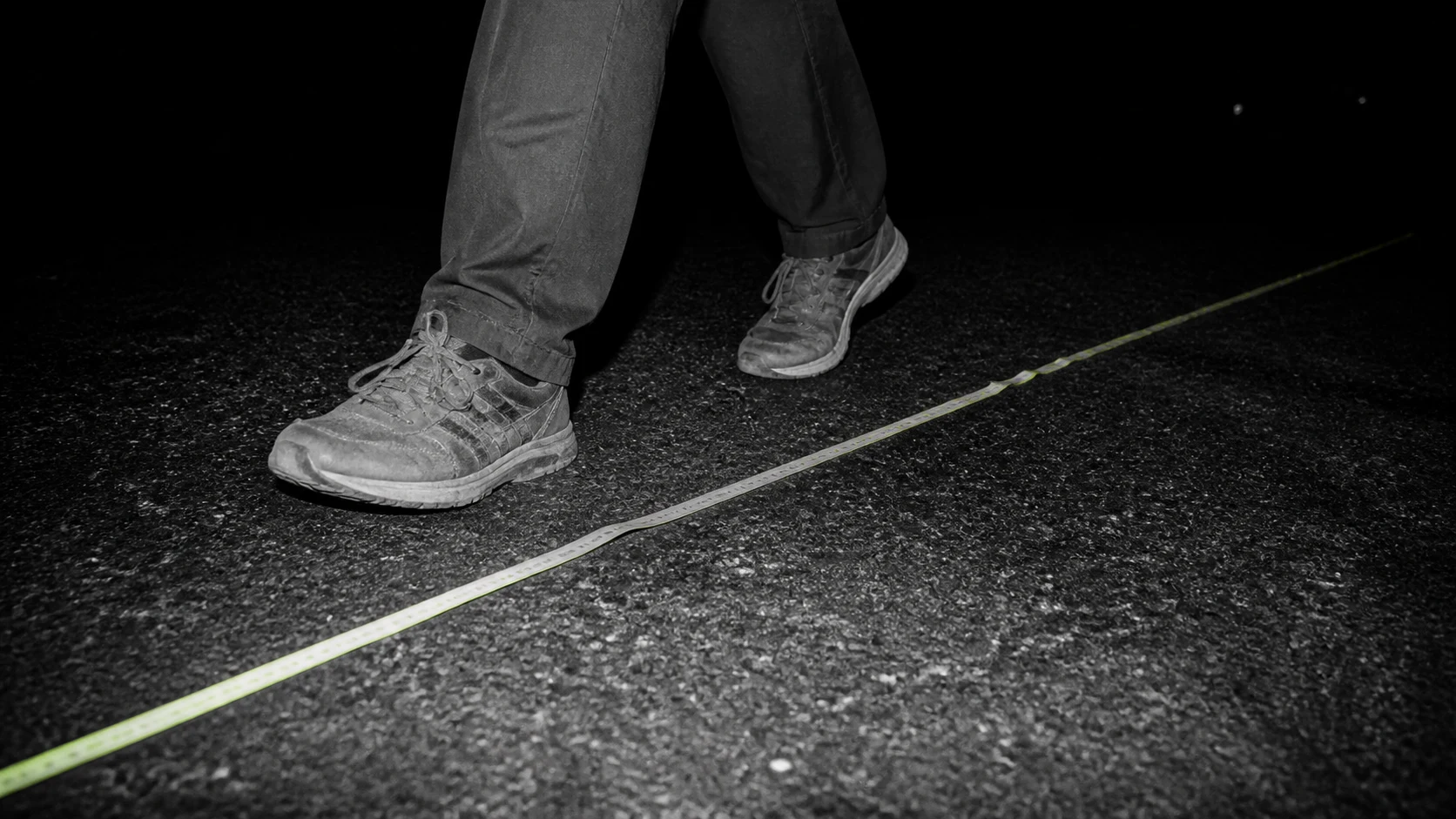
Measure a known, straight section instead of trying to measure one step. Walk into the section at your normal pace, count both feet, and divide the measured distance by the number of steps. Repeat several times and average the result.
If you cover 60 feet in 24 steps, each step is 2.5 feet or 30 inches. Ten thousand multiplied by 30 and divided by 63,360 gives 4.7348 miles. The honest display is about 4.73 miles, not a long string of decimals.
Create separate values when the movement is meaningfully different. A relaxed indoor walk, a brisk outdoor walk, and a run do not have to share one calibration. The correct input is the one that describes the activity you are planning.
- Measure a long enough section to dilute one awkward step.
- Use your ordinary pace and continue walking beyond both markers.
- Average multiple passes rather than choosing the result you expected.
- Recheck after a major change in gait, device, or usual movement mode.
Sources [2]
Give the round number a shape.
Turn the distance into walking time
Distance does not tell you how long the goal takes. Divide the estimated miles by your usual walking speed, or use a familiar route’s recent elapsed time. The table below holds the distance at 4.73 miles and changes only pace.
Real outings include crossings, hills, stops, crowds, weather, and pauses. Treat the table as moving time on level ground, then add the buffer your route needs. If your schedule allows only 35 minutes, the useful plan may be several walks across the day rather than one continuous effort.
Approximate moving time for 4.73 miles
Swipe table →| Walking speed | Minutes per mile | Moving time |
|---|---|---|
| 2.5 mph | 24:00 | 1 hr 54 min |
| 3.0 mph | 20:00 | 1 hr 35 min |
| 3.5 mph | 17:09 | 1 hr 21 min |
| 4.0 mph | 15:00 | 1 hr 11 min |
Keep in mind
These times describe the 30-inch example and uninterrupted movement. Your measured route time is better for planning a real day.
Map the goal onto routes you already know
A conversion earns its place when it makes the target easier to see. If a familiar loop is 1.2 miles, the 4.73-mile example is almost four loops. If the walk to work is 0.8 miles each way, that trip contributes roughly 1.6 miles before any other daily movement.
Do not assume all 10,000 steps need to come from a tracked workout. Household movement, work, errands, transit, and short walks can contribute to the count. The route plan should fill the expected gap, not duplicate movement already in the day.
Build a normal plan and a fallback. The normal plan might include a 2.5-mile purposeful walk plus routine movement. The fallback might split the same planned distance into a morning loop, lunch loop, and brief evening close. A daily target survives more often when it has more than one shape.
The same 4.73 miles at three paces.
Keep the conversion separate from the goal decision
The calculator answers how far a count may represent. It does not decide whether 10,000 is the right daily goal for you. Research on daily steps is better understood as a graded relationship than a switch that activates at one round number.
Use a normal seven-day average to understand your starting point. A person averaging 4,200 steps may learn more from a repeatable move toward 5,000 than from repeatedly missing 10,000. A person already near 10,000 may care more about consistency, route quality, or recovery than increasing the count.
Age, health, disability, symptoms, recovery, work, and caregiving can all change what is appropriate. A distance conversion is neutral arithmetic. A personal activity target is a decision that belongs to the person and, when needed, a qualified clinician who knows their situation.
Keep in mind
Do not use this conversion to override pain, concerning symptoms, medical guidance, unsafe conditions, or the need for recovery.
Sources [4]
Use one primary device for comparisons
A phone and watch may disagree about both steps and distance because they use different sensors, positions, calibration histories, GPS signals, and recognition rules. A calculator adds another method: a fixed step-length input applied to the count you provide.
Research reviews show that device performance varies by model, wear location, speed, and population. Small differences are expected. For weekly comparisons, choose one primary source and carry or wear it consistently so a change is more likely to reflect your behavior than a change in measurement method.
Investigate differences that are large, repeatable, or sudden. Check permissions, battery-saving modes, device placement, duplicate data sources, and whether one device counted an activity the other did not. The objective is a stable trend—not forced agreement at every moment.
Sources [3]
Fast answers
Frequently asked questions
How many miles is 10,000 steps?
At a 30-inch step length, 10,000 steps is about 4.73 miles. At 24 inches it is about 3.79 miles; at 36 inches it is about 5.68 miles.
Is 10,000 steps exactly five miles?
Only if your average step is 31.68 inches, which equals 2,000 steps per mile. Five miles is a convenient shortcut, not a universal conversion.
How many kilometers is 10,000 steps?
At a 30-inch step, it is about 7.62 kilometers. The estimate ranges from about 6.10 kilometers at 24 inches to 9.14 at 36 inches.
How long does it take to walk 10,000 steps?
Using the 30-inch example, 10,000 steps covers about 4.73 miles. That is roughly 1 hour 35 minutes at 3 mph before crossings and stops. Your usual pace, step length, and route determine the real time.
Do I need to walk 10,000 steps every day?
No single count is required for every person. Use your baseline, health context, ability, and routine to choose a useful target, and seek individualized guidance when health or symptoms affect safe activity.
Bottom line
Make the next decision repeatable.
Ten thousand steps becomes more useful when it stops being an abstract badge and becomes a route you understand. Measure your normal step, convert with modest precision, and use the distance to shape the day—not to turn every imperfect count into a verdict.
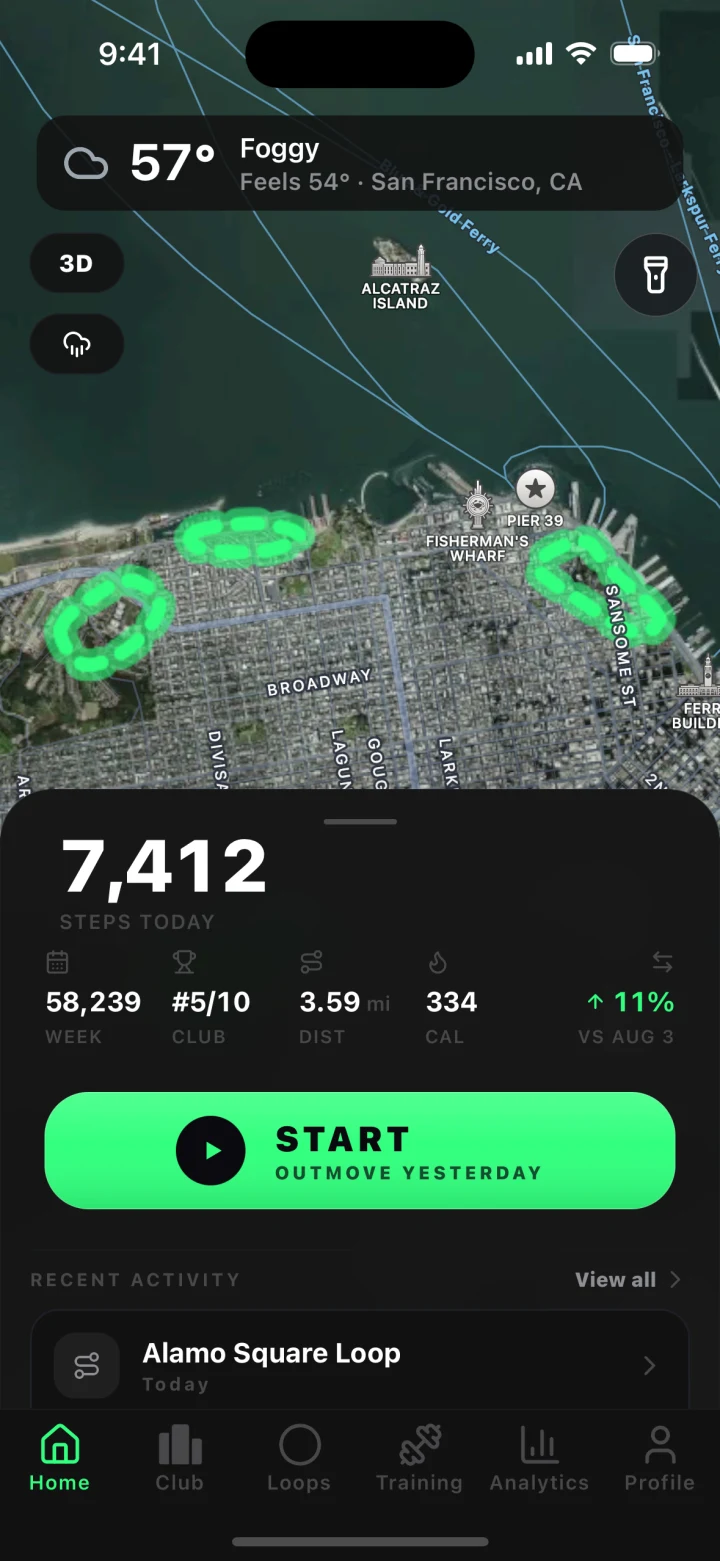
A goal still belongs to the day.
GhostLoop keeps steps beside distance, the week, Club rank, and the route map—context that a round target cannot provide by itself.
Captured from GhostLoop iOS · August 2026Put it in motion
Set your step length and see 10,000 steps in miles and kilometers without hiding the assumption behind the answer.
Convert your stepsEditorial note
How this guide was made
All conversions use the same visible step-length formula as the GhostLoop steps-to-miles calculator. Times are distance divided by stated speed and rounded to whole minutes. Research is used to explain measurement limits and daily-goal context; no worked example is presented as a medical recommendation.
Sources & further reading
About the author
Ian Castillo · Founder, GhostLoop
Ian Castillo is the founder of GhostLoop, a movement app built around racing your past activity, Ghost Pacers, Clubs, and Challenges.
Author profileThis guide is general educational information, not individualized medical advice. Stop activity and seek appropriate professional guidance if symptoms or pain concern you.